- Your cart is empty
- Continue Shopping


Price range: €200 through €390
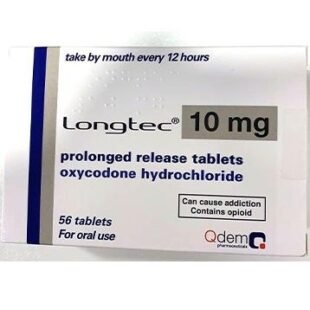
Oxymorphon (international nonproprietary name: oxymorphone; chemically designated as 14-hydroxydihydromorphinone hydrochloride) is a high-potency, semi-synthetic phenanthrene-derivative opioid agonist analgesic available clinically in immediate-release ($5\text{mg}$, $10\text{mg}$), extended-release ($5\text{mg}$ to $40\text{mg}$), and parenteral injectable formulations. Classified as a Schedule II controlled substance in the United States and a strictly regulated narcotic prescription medication globally, Oxymorphon is indicated for the management of severe acute or chronic pain requiring an opioid analgesic and for which alternative treatments are inadequate. Exhibiting roughly 3-fold greater oral analgesic potency and 10-fold greater parenteral potency than morphine, it delivers profound analgesia through selective activation of central $\mu$-opioid receptors.
Severe Acute Pain (Immediate-Release / Parenteral): Indicated for short-term management of severe post-operative, post-traumatic, or acute visceral pain requiring high-potency opioid analgesia when non-opioid regimens fail.
Severe Chronic Pain Requiring Around-the-Clock Therapy (Extended-Release): Prescribed for opioid-tolerant adults experiencing persistent, debilitating cancer-related pain, advanced osteoarthritis, or refractory chronic back pain requiring continuous 24-hour analgesia.
Preoperative Sedation & Obstetric Analgesia (Parenteral): Utilized in controlled hospital settings as an adjunct to general anesthesia or for relief of severe acute pain during labor and delivery.
Oxymorphon exerts potent central analgesia by selectively binding and activating inhibitory G-protein-coupled opioid receptors across spinal and supraspinal nociceptive pathways:
Selective High-Affinity $\mu$-Opioid Agonism: Binds stereospecifically to central $\mu$-opioid ($\text{MOR}$) receptors (with secondary low-affinity interaction at $\delta$-opioid receptors), activating $\text{G}_{\text{i/o}}$ proteins to inhibit adenylyl cyclase and reduce intracellular cyclic adenosine monophosphate ($\text{cAMP}$).
Pre- and Postsynaptic Neuronal Hyperpolarization: Closes voltage-gated N-type calcium ($\text{Ca}^{2+}$) channels on primary afferent nociceptors (suppressing glutamate and substance P release in the spinal dorsal horn) while opening G-protein-coupled inwardly rectifying potassium ($\text{GIRK}$) channels to hyperpolarize postsynaptic pain-transmission neurons.
Pharmacokinetics: Exhibits low oral absolute bioavailability of approximately 10% due to extensive first-pass hepatic conjugation, reaching peak plasma concentrations ($T_{\max}$) within 0.5 hours (immediate-release) or 1.5 to 3 hours (extended-release). Crucially, administration with a high-fat meal increases peak plasma concentrations ($C_{\max}$) by up to 38%–50%, requiring strict fasting administration (at least 1 hour before or 2 hours after eating). Metabolized primarily via hepatic $\text{UGT2B7}$-mediated glucuronidation (bypassing cytochrome P450 enzymes) into inactive oxymorphone-3-glucuronide and active 6-hydroxy-oxymorphone, demonstrating an elimination half-life of 7 to 9 hours (immediate-release) and 9 to 11 hours (extended-release).
Minimal Cytochrome P450 ($\text{CYP450}$) Drug Interactions: Hepatic metabolism via glucuronidation ($\text{UGT2B7}$) avoids major $CYP3A4$ and $CYP2D6$ metabolic bottlenecks, reducing pharmacokinetic variability in polypharmacy patients.
High Analgesic Efficacy in Opioid-Tolerant Patients: Offers strong $\mu$-opioid receptor intrinsic activity suitable for opioid rotation when patients develop incomplete cross-tolerance to morphine, oxycodone, or hydromorphone.
Reduced Histamine Release: Produces less peripheral mast-cell histamine degranulation than equivalent analgesic doses of morphine, lowering pruritus and cutaneous flushing incidence.
Pronounced Food-Effect Absorption Spikes: Taking oral Oxymorphon with food markedly elevates $C_{\max}$, increasing the risk of acute opioid toxicity and respiratory depression if dosing schedules are inconsistent.
Severe Alcohol Dose-Dumping Hazard: Co-ingestion with ethanol—even in small amounts—accelerates drug release and elevates peak plasma concentrations by up to 270%, precipitating fatal overdose.
Extreme Abuse, Addiction, & Overdose Liability: High lipophilicity and euphorigenic potency create substantial risks of diversion, parenteral misuse, physical dependence, and fatal respiratory arrest.
| Quantity | 100 Pills, 180 Pills, 200 Pills |
|---|


 English English
 German
 Italian
 Dutch
 Spanish


Reviews
There are no reviews yet.