- Your cart is empty
- Continue Shopping


€75
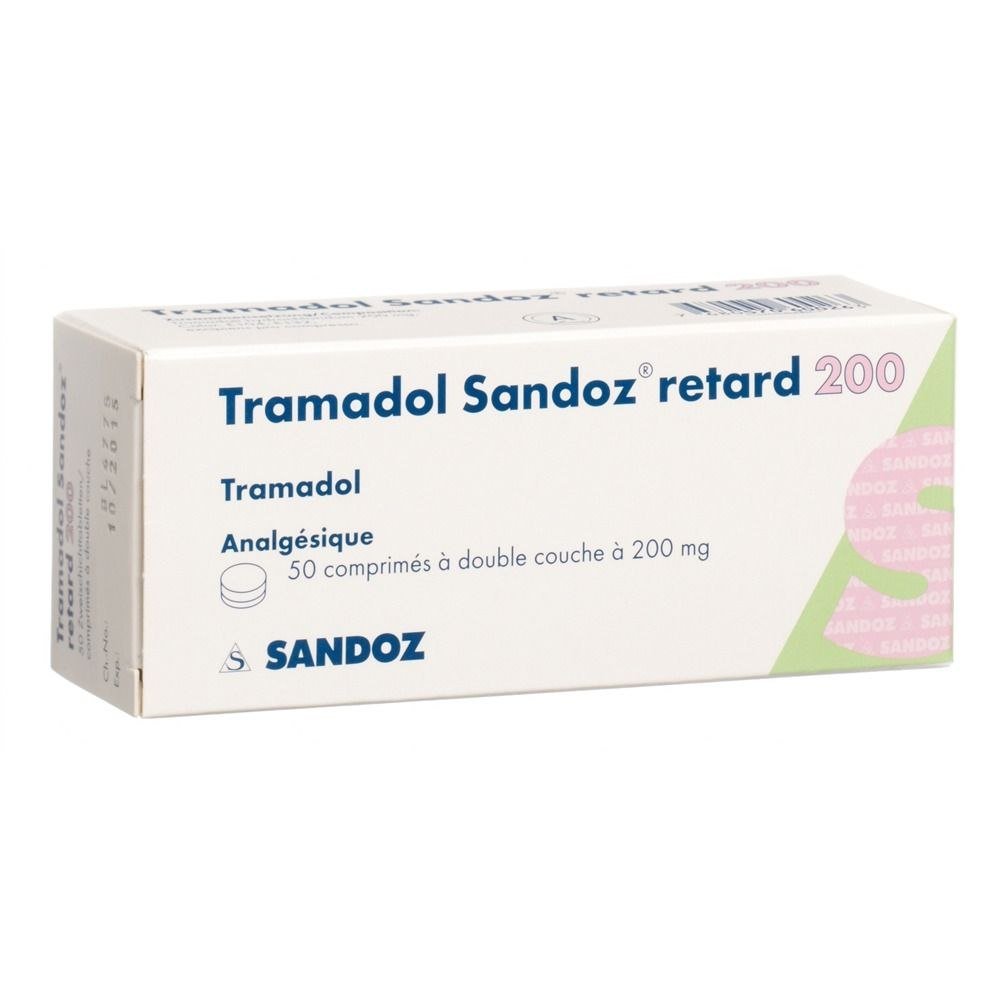
Tramadol 200mg is a high-potency centrally acting synthetic analgesic indicated for the management of severe, continuous chronic pain in adults requiring around-the-clock long-term opioid therapy where alternative treatment options are inadequate or un-tolerated. Classified as a Schedule IV controlled substance in many jurisdictions, Tramadol 200mg is primarily formulated as an extended-release (ER) oral tablet. It features a unique dual mechanism of action combining weak $\mu$-opioid receptor agonism with monoamine (serotonin and norepinephrine) reuptake inhibition.
Severe Chronic Pain Control: Indicated for the management of continuous, severe pain in adults requiring long-term, daily, around-the-clock opioid treatment.
Osteoarthritis & Joint Pain Protocols: Prescribed for moderate-to-severe chronic osteoarthritis pain when non-opioid options (such as NSAIDs or acetaminophen) fail to provide adequate pain relief.
Neuropathic Pain Management: Utilized in specialized pain management protocols to alleviate persistent central or peripheral neuropathic pain conditions, such as diabetic neuropathy.
Tramadol 200mg produces potent analgesia through two complementary, synergistic pharmacological mechanisms within the central nervous system:
$\mu$-Opioid Receptor Agonism: Parent tramadol is a weak agonist at central $\mu$-opioid receptors. Its active $O$-demethylated metabolite (M1, synthesized in the liver via $CYP2D6$) binds with significantly higher affinity to $\mu$-receptors, inhibiting adenylyl cyclase and hyperpolarizing postsynaptic membranes.
Monoamine Reuptake Inhibition: Parent tramadol selectively inhibits the presynaptic reuptake of serotonin (5-HT) and norepinephrine (NE), elevating synaptic neurotransmitter concentrations and enhancing descending inhibitory pain pathways in the spinal cord.
Pharmacokinetics: Extended-release 200mg formulations provide steady, gradual release over 24 hours, reaching peak plasma levels ($T_{\max}$) in approximately 12 hours. It undergoes extensive hepatic metabolism via $CYP2D6$ and $CYP3A4$, with clearance occurring primarily through renal excretion.
| Clinical Parameter | Standard Prescribing Protocol |
| Active Ingredient | Tramadol hydrochloride 200mg (Extended-release oral tablet). |
| Administration Route | Administered orally once daily at the same time each day, with or without food. |
| Ingestion Protocol | Tablets must be swallowed whole with water. Do not crush, chew, break, or dissolve, as this causes rapid drug release and fatal dose-dumping. |
| Maximum Daily Cap | The maximum cumulative dose for extended-release tramadol strictly must not exceed 300mg per day. |
Black Box Warning — Abuse, Addiction, and Misuse: Tramadol 200mg carries significant risks of opioid addiction, abuse, and misuse, which can lead to severe overdose and death.
Seizure Threshold Lowering: Tramadol can induce seizures even at recommended doses. Risk is heightened in patients with seizure disorders, head trauma, or those co-prescribed SSRIs, SNRIs, tricyclic antidepressants, or antipsychotics.
Serotonin Syndrome Hazard: Concomitant use with serotonergic agents (SSRIs, SNRIs, MAOIs, triptans) can precipitate life-threatening serotonin syndrome.
CYP2D6 Polymorphism Risk: Ultra-rapid $CYP2D6$ metabolizers process tramadol into its potent M1 metabolite much faster, risking fatal respiratory depression. Poor metabolizers may experience reduced therapeutic efficacy.
 English English
 German
 Italian
 Dutch
 Spanish