- Your cart is empty
- Continue Shopping




€140
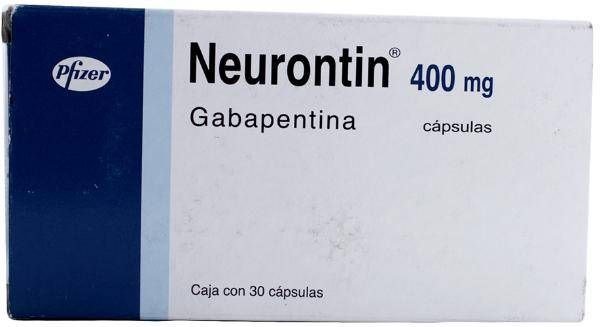
Neurontin 400mg is a prescription anticonvulsant and neuropathic analgesic containing gabapentin, a structural analogue of the inhibitory neurotransmitter gamma-aminobutyric acid ($\text{GABA}$). Classified as a gabapentinoid, Neurontin 400mg is indicated for the clinical management of postherpetic neuralgia (PHN) in adults and as adjunctive therapy in the treatment of partial-onset seizures, with or without secondary generalization, in pediatric and adult patients. Despite its structural relationship to $\text{GABA}$, it does not interact directly with $\text{GABA}_\text{A}$ or $\text{GABA}_\text{B}$ receptors.
Postherpetic Neuralgia (PHN): Indicated for the management of chronic neuropathic pain following shingles (herpes zoster reactivation) in adult patients.
Adjunctive Seizure Management: Prescribed alongside other anticonvulsant agents for controlling partial-onset seizures in patients aged 3 years and older.
Off-Label Neuropathic Pain Protocols: Frequently utilized in specialized clinical protocols for diabetic peripheral neuropathy, central neuropathic pain, and restless legs syndrome.
Neurontin 400mg exerts its analgesic and anticonvulsant effects by selectively inhibiting presynaptic voltage-gated calcium channels:
Selective High-Affinity Binding: Gabapentin binds with high affinity to the auxiliary $\alpha_2\delta$-1 subunit of presynaptic voltage-gated calcium channels (VGCCs) in the central nervous system, particularly within the spinal cord and neocortex.
Suppression of Excitatory Release: Inhibits calcium influx through VGCCs in hyper-excited neurons, reducing the presynaptic exocytosis of excitatory neurotransmitters including glutamate, Substance P, and calcitonin gene-related peptide ($\text{CGRP}$).
No Direct GABA Agonism: Does not convert into $\text{GABA}$, does not alter $\text{GABA}$ uptake or degradation, and does not bind to benzodiazepine, opioid, or cannabinoid receptors.
Pharmacokinetics & Dose-Dependent Absorption: Absorbed via the L-amino acid transport system in the proximal small intestine. Absorption is saturable (dose-dependent active transport), meaning bioavailability decreases as single doses increase. Peak plasma concentration ($T_{\max}$) is achieved within 2 to 3 hours, with an elimination half-life of 5 to 7 hours. It is excreted unchanged via renal clearance.
| Clinical Parameter | Standard Prescribing Protocol |
| Active Ingredient | Gabapentin 400mg (Oral capsule). |
| Administration Route | Taken orally with water; may be ingested with or without food. |
| Dosing Protocol | Typically initiated with a step-up titration schedule (e.g., Day 1: 300mg/400mg once; Day 2: twice daily; Day 3: three times daily). Must be taken at evenly spaced intervals to maintain stable plasma levels. |
Central Nervous System Depression: Frequently causes somnolence, dizziness, sedation, and ataxia. Driving or operating heavy machinery is strictly contraindicated until individual tolerance is established.
Respiratory Depression Hazard: Serious, life-threatening, or fatal respiratory depression may occur when Neurontin is co-administered with opioids, central nervous system depressants, or in patients with underlying respiratory impairment (e.g., COPD).
Withdrawal & Status Epilepticus: Abrupt discontinuation can precipitate rebound neuropathic pain, severe anxiety, sweating, and, in patients with epilepsy, withdrawal seizures or status epilepticus; taper gradually over at least 1 week.
Renal Function Adjustment: Because gabapentin is eliminated entirely by renal excretion, dose reduction is required in patients with compromised renal function ($CrCl < 60 \text{ mL/min}$) or receiving hemodialysis.


 English English
 German
 Italian
 Dutch
 Spanish