- Your cart is empty
- Continue Shopping



Price range: €55 through €545
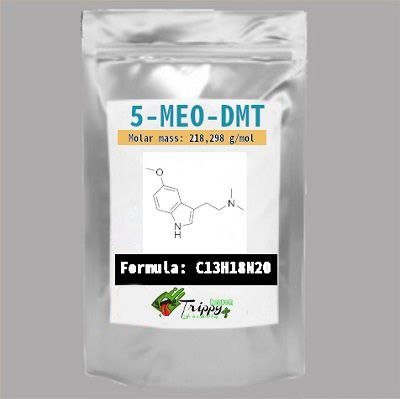
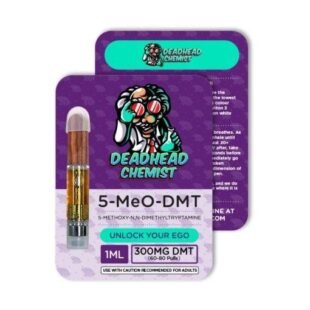
5 MeO DMT (chemically designated as 2-(5-methoxy-1H-indol-3-yl)-$N,N$-dimethylethan-1-amine, also known as O-methylbufotenine) is an ultra-potent, naturally occurring and synthetically produced methoxylated indolealkylamine serotonergic hallucinogen—exhibiting approximately 4- to 10-fold greater milligram potency than unsubstituted $N,N$-dimethyltryptamine ($\text{DMT}$). Endogenously present in the parotoid gland secretions of the Sonoran Desert toad (Incilius alvarius) and several South American plant species (e.g., Virola and Anadenanthera resins), 5-MeO-DMT is classified as a Schedule I controlled substance in the United States and strictly regulated under national controlled-substance statutes across major global jurisdictions. It possesses no approved routine clinical medical indications outside strictly regulated Phase I/II investigational clinical trials and certified forensic/analytical reference laboratories (Not for Human Consumption).
Forensic & Clinical Toxicology Reference Standard: Utilized in certified analytical chemistry laboratories (via $\text{GC-MS}$ and $\text{LC-MS/MS}$) as a primary quantitative standard to identify and quantify 5-MeO-DMT and its active metabolite bufotenine in forensic casework, biological specimens, and botanical or zoological extracts.
Investigational Neuropsychiatric Research: Studied under controlled inpatient clinical trial protocols (utilizing synthetic pharmaceutical-grade intranasal, vaporized, or intramuscular formulations) for potential rapid-acting antidepressant efficacy in treatment-resistant depression ($\text{TRD}$) and postpartum depression.
No Routine Therapeutic Indications: Unformulated crystalline or botanical/toad-derived 5-MeO-DMT possesses zero approved clinical indications; unregulated human exposure carries high risks of acute autonomic instability, respiratory depression, and severe neuropsychiatric emergencies.
Unlike classical hallucinogens ($N,N$–$\text{DMT}$, psilocybin, $\text{LSD}$) that act predominantly via $5\text{-HT}_{2\text{A}}$ receptor agonism, 5-MeO-DMT exhibits exceptionally high binding affinity and functional potency at serotonin $5\text{-HT}_{1\text{A}}$ receptors alongside $5\text{-HT}_{2\text{A}}$ activation:
Predominant $5\text{-HT}_{1\text{A}}$ Receptor Full Agonism: Binds with low-nanomolar affinity ($K_i \approx 1.9\text{ to }3\text{ nM}$) to somatodendritic and postsynaptic $5\text{-HT}_{1\text{A}}$ receptors—exhibiting roughly 300- to 1,000-fold higher selectivity for $5\text{-HT}_{1\text{A}}$ over $5\text{-HT}_{2\text{A}}$ in binding assays—activating $\text{G}_{\text{i/o}}$-coupled inwardly rectifying $\text{K}^+$ channels, hyperpolarizing dorsal raphe serotonergic neurons, and profoundly altering cortical-subcortical connectivity.
Secondary $5\text{-HT}_{2\text{A}}$, $5\text{-HT}_{2\text{C}}$, & Monoamine Transporter Activity: Activates postsynaptic cortical $5\text{-HT}_{2\text{A}}$ and $5\text{-HT}_{2\text{C}}$ receptors at higher concentrations and weakly inhibits serotonin ($\text{SERT}$) and norepinephrine ($\text{NET}$) reuptake, contributing to intense sensory/ego dissolution and pronounced peripheral autonomic stimulation.
Pharmacokinetics: Orally inactive when administered alone due to rapid, complete first-pass oxidative deamination by gastrointestinal and hepatic monoamine oxidase A ($\text{MAO-A}$) into 5-methoxyindole-3-acetic acid ($\text{5-MIAA}$). When inhaled (vaporized) or administered parenterally, 5-MeO-DMT rapidly crosses the blood-brain barrier within 15 to 60 seconds, reaching peak neurological effects within 1 to 3 minutes with an acute duration of 15 to 30 minutes and a plasma elimination half-life of 12 to 20 minutes. A minor but pharmacologically critical fraction undergoes $CYP2D6$-mediated $O$-demethylation into the potent active metabolite bufotenine (5-hydroxy-$N,N$-dimethyltryptamine), which exhibits high affinity for $5\text{-HT}_{2\text{A}}$ receptors and peripheral vasoconstrictive/cardiotoxic potential.
High-Affinity $5\text{-HT}_{1\text{A}}$-Biased Psychedelic Probe: Serves as a distinct pharmacological tool in neuropharmacology for differentiating $5\text{-HT}_{1\text{A}}$-driven cortical synchronization and rapid neuroplasticity from predominantly $5\text{-HT}_{2\text{A}}$-mediated hallucinogenic mechanisms.
Ultra-Short Clinical Session Window: Rapid $\text{MAO-A}$-mediated clearance permits tightly controlled, brief inpatient clinical observation periods in investigational depression trials.
Narrow Therapeutic Index & Severe Autonomic/Respiratory Toxicity: High milligram potency (active threshold doses of $2\text{ to }5\text{mg}$, with severe toxicity occurring above $10\text{ to }15\text{mg}$) creates a narrow margin of safety; excessive doses precipitate profound tachycardia, severe hypertension, hyperthermia, cyanosis, and acute respiratory depression or arrest.
Lethal Serotonin Toxicity with $\text{MAOIs}$ or Serotonergic Medications: Combining 5-MeO-DMT with monoamine oxidase inhibitors ($\text{MAOIs}$—including harmala alkaloids found in ayahuasca preparations), $\text{SSRIs}$, $\text{SNRIs}$, or tricyclic antidepressants blocks $\text{MAO-A}$ clearance and precipitates fulminant, potentially fatal serotonin syndrome.
Complete Loss of Motor Control, Emesis, & Aspiration Hazard: Rapid onset frequently induces abrupt unresponsiveness, catatonia, or involuntary motor agitation accompanied by nausea and vomiting, creating an acute risk of pulmonary aspiration if unsupervised.
| Quantity | 1G, 3G, 5G, 10G |
|---|

 English English
 German
 Italian
 Dutch
 Spanish


Reviews
There are no reviews yet.