- Your cart is empty
- Continue Shopping



Price range: €130 through €350
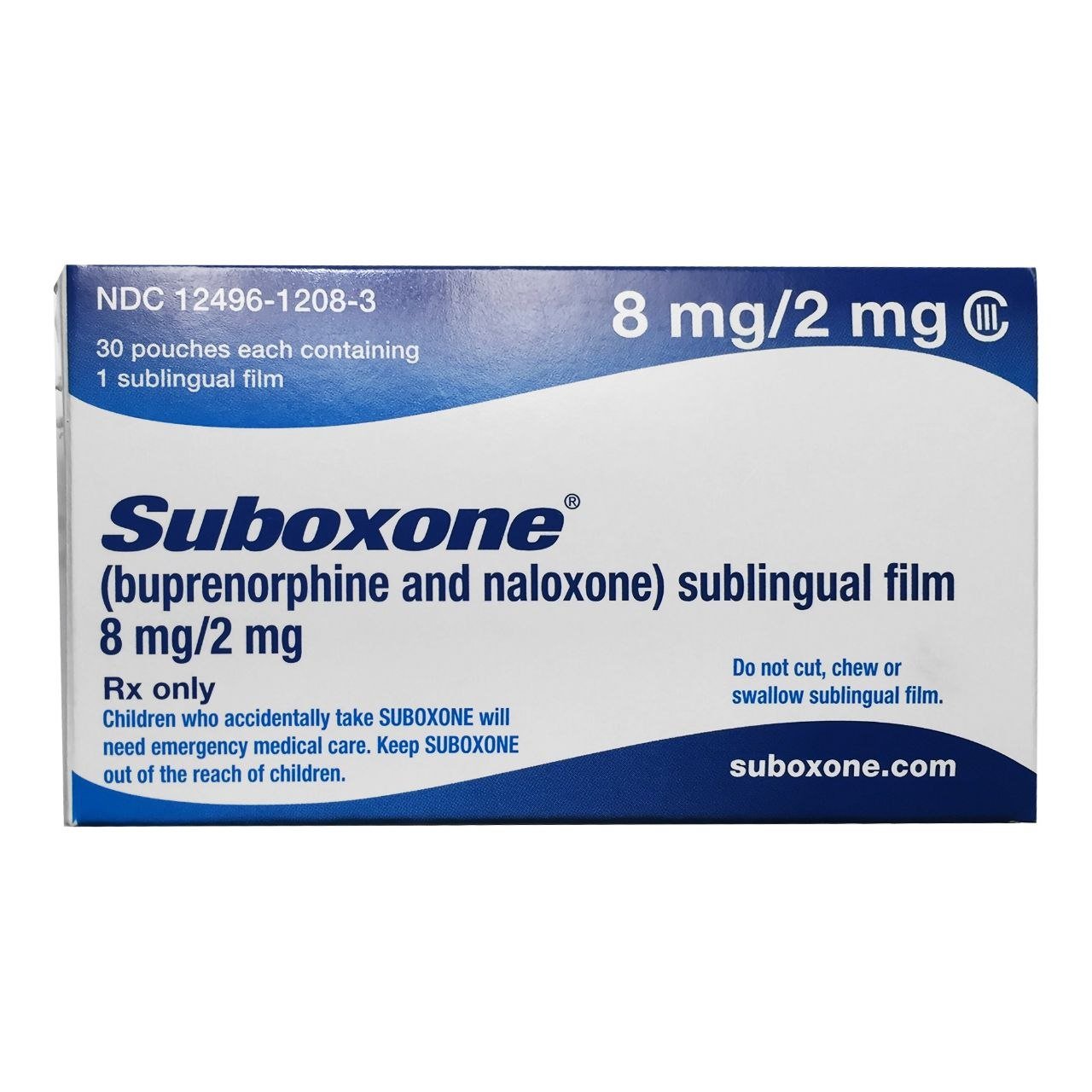
Suboxone is a combination prescription medication containing buprenorphine hydrochloride (a partial $\mu$-opioid receptor agonist) and naloxone hydrochloride (an opioid antagonist) in a 4:1 ratio. Formulated as sublingual films or sublingual tablets, Suboxone is indicated for the treatment of opioid use disorder (OUD) as part of a comprehensive medication-assisted treatment (MAT) framework that includes psychosocial support and counseling.
Suboxone’s efficacy and safety profile rely on the distinct pharmacodynamic interactions of its two active components:
High Affinity and Partial Agonism (Buprenorphine): Buprenorphine binds with extremely high affinity to $\mu$-opioid receptors in the central nervous system, displaceable only by high concentrations of full agonists. As a partial agonist, it exhibits a “ceiling effect” for respiratory depression and euphoria, providing stabilization without inducing maximum opioid activation.
Abuse Deterrent Mechanism (Naloxone): When taken sublingually as prescribed, naloxone exhibits minimal oral bioavailability ($< 3\%$) due to extensive first-pass hepatic metabolism, allowing buprenorphine to act unimpeded. However, if the formulation is crushed and injected or snorted, naloxone enters systemic circulation intact, blocking $\mu$-opioid receptors and precipitating acute withdrawal symptoms.
Pharmacokinetics: Sublingual administration reaches peak plasma concentration ($T_{\max}$) in approximately 0.5 to 3 hours for buprenorphine, which displays a long terminal elimination half-life of 24 to 42 hours, allowing once-daily dosing.
Suppression of Opioid Craving: Maintains stable baseline opioid receptor occupation, substantially diminishing physiological and psychological cravings for short-acting full opioids (e.g., heroin, oxycodone, fentanyl).
Prevention of Withdrawal Symptoms: Prevents acute opioid withdrawal syndrome, enabling individuals to stabilize daily function and engage effectively in therapy.
Blockade of Illicit Opioid Effects: Due to buprenorphine’s high receptor affinity, concurrent use of illicit opioids is largely blocked from binding, reducing the risk of euphoria or accidental overdose.
Reduced Risk of Overdose: The partial agonist ceiling effect significantly lowers the risk of life-threatening respiratory depression compared to full $\mu$-opioid agonists.
| Clinical Parameter | Standard Prescribing Protocol |
| Controlled Substance Status | Schedule III Controlled Substance (Requires licensed practitioner oversight) |
| Administration Route | Sublingual or buccal film/tablet. Must dissolve completely under the tongue; do not chew, swallow whole, or cut. |
| Treatment Phases | Divided into Induction (initiated when mild-to-moderate withdrawal is evident) and Maintenance phases. |
Precipitated Withdrawal Risk: Initiating Suboxone before objective signs of opioid withdrawal appear will displace full agonists from receptors and precipitate severe, acute withdrawal.
CNS Depressant Interactions: Concomitant administration with benzodiazepines, alcohol, or other central nervous system depressants creates severe risks of profound sedation, respiratory depression, coma, and death.
Legitimate Medical Access: Suboxone is a tightly regulated Schedule III medication. It is legally accessible exclusively through prescription dispensing by certified healthcare providers and licensed retail or clinical pharmacies.
| Quantity | 60 Pills, 120 Pills, 240 Pills |
|---|

 English English
 German
 Italian
 Dutch
 Spanish