- Your cart is empty
- Continue Shopping


€145
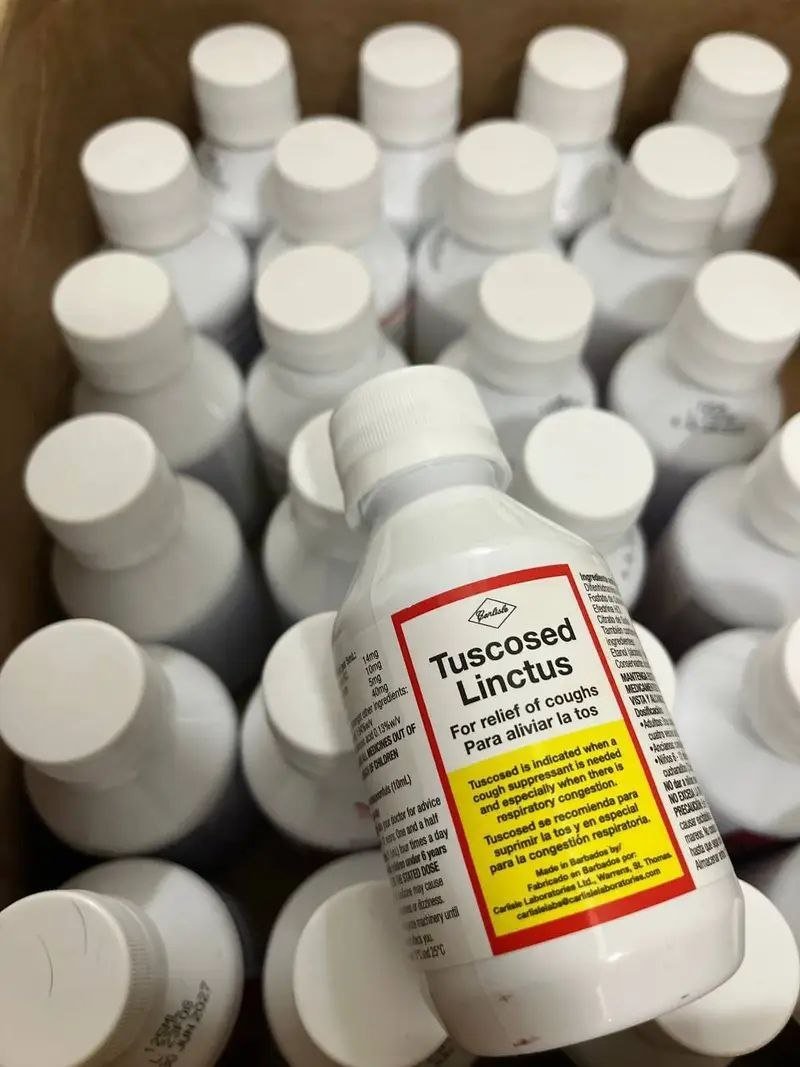
Tuscosed Linctus is a fixed-combination oral liquid prescription formulation indicated for the short-term symptomatic relief of dry, non-productive coughs, upper respiratory tract congestion, and associated allergic symptoms. Classified as a regulated narcotic antitussive preparation, its primary active constituents typically include codeine phosphate (a central opioid cough suppressant), an antihistamine (such as diphenhydramine), and a sympathomimetic decongestant (such as ephedrine or pseudoephedrine). Because of its high potency and central depressant properties, it is restricted to clinical administration under strict medical supervision.
Symptomatic Relief of Dry Cough: Prescribed for suppressing severe, exhausting, non-productive (dry) coughs that interfere with rest and sleep.
Upper Respiratory Congestion: Reduces mucosal edema, bronchial constriction, and nasal congestion associated with common colds or upper respiratory infections.
Allergic Rhinorrhea Suppression: Diminishes excessive secretions, sneezing, and post-nasal drip triggered by upper respiratory hypersensitivity.
Tuscosed Linctus combines central and peripheral pharmacological actions to manage cough and congestion:
Central Antitussive Action: Codeine acts as a prodrug bioactivated via $CYP2D6$ into morphine, binding to $\mu$-opioid receptors in the medullary cough center of the brainstem to elevate the threshold of the cough reflex.
Antihistaminic & Sedative Effect: Diphenhydramine competitively block $H_1$ histamine receptors, reducing capillary permeability, drying hypersecretions, and producing mild central sedation to facilitate nocturnal sleep.
Sympathomimetic Decongestant: Ephedrine stimulates vascular $\alpha_1$-adrenergic receptors, promoting mucosal vasoconstriction in the nasal passages, which reduces tissue swelling and improves airway patency.
Pharmacokinetics: Rapidly absorbed from the gastrointestinal tract, with initial antitussive activity occurring within 30 to 60 minutes. Codeine exhibits an elimination half-life of 2.5 to 4 hours and undergoes hepatic metabolism via glucuronidation and $CYP2D6$/$CYP3A4$ pathways.
| Clinical Parameter | Standard Prescribing Protocol |
| Active Ingredients | Codeine phosphate, Diphenhydramine HCl, Ephedrine HCl (or equivalent decongestant) in a sweetened liquid base. |
| Administration Route | Administered orally using a calibrated measuring device. |
| Dosing Protocol | Dosed strictly according to age and weight (typically 5mL to 10mL every 4 to 6 hours as needed). |
| Duration Limit | Strictly limited to short-term therapy (typically 3 to 5 days max). |
Black Box Warning — Abuse, Addiction, and Misuse: Codeine carries a significant potential for physical dependence, abuse, and addiction. Use must be restricted to short durations.
Life-Threatening Respiratory Depression: High doses or co-administration with opioids, alcohol, benzodiazepines, or other CNS depressants create extreme risks of profound respiratory arrest, coma, and fatal overdose.
Pediatric Contraindication: Strictly contraindicated in children under 12 years of age, and in adolescents (12–18) following tonsillectomy or adenoidectomy, due to the risk of life-threatening respiratory depression from unpredictable $CYP2D6$ ultra-rapid metabolism.
Productive Cough Warning: Not recommended for productive, phlegm-producing coughs, as suppressing the cough reflex can lead to mucus retention and secondary pulmonary infection.
 English English
 German
 Italian
 Dutch
 Spanish